Why Trade Forex
Benefits of Forex Trading
There are many benefits of trading forex, which include convenient market hours, high liquidity, and the ability to trade on margin.
When traders choose which market to trade, they are looking for optimal trading conditions and the best chance of taking a profit. There are many reasons why millions of traders across the world think that the forex market fits these criteria, but we are going to focus on the top eight benefits of forex trading:
1. Ability to go long or go short
2. Forex market hours
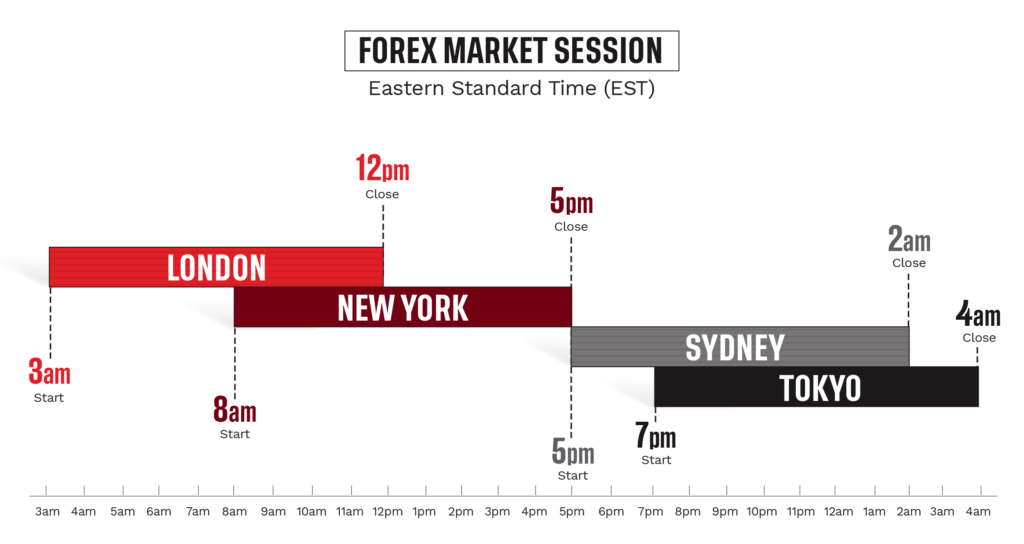
The foreign exchange (FX) market is open 24 hours a day, five days a week—from 5pm EST Sunday to 4pm EST Friday.
These long hours are because forex transactions are completed between parties directly, over-the-counter (OTC), rather than through a central exchange. As forex is a truly global market, you can always take advantage of different active session’s forex trading hours.
There are four major trading sessions each day, matching the opening hours of banks in London, New York, Sydney and Tokyo. There is a high volume of trades throughout each of these sessions, and especially when sessions overlap.
It is important to remember that the forex market’s opening hours will vary in March, April, October and November, as countries shift to daylight savings on different days.
Does forex trade on weekends?
The forex market closes on Friday afternoon at 4pm EST and does not open again until 5pm EST on Sunday afternoon. However, because the market is only closed to retail traders (not central banks and related organizations), forex trading actually does take place over the weekend. This means that there can be a difference in price between Friday close and Sunday open—known as a gap.
Traders need to be highly aware of the weekend forex trading hours and alter their positions accordingly. If you do not want to expose your position to the risk of gapping, you may want to consider closing your position on Friday evening or placing stop-losses and take-profits to manage this risk.
3. High liquidity in forex
4. Volatility creates trading opportunity
5. Leverage can make your money go further
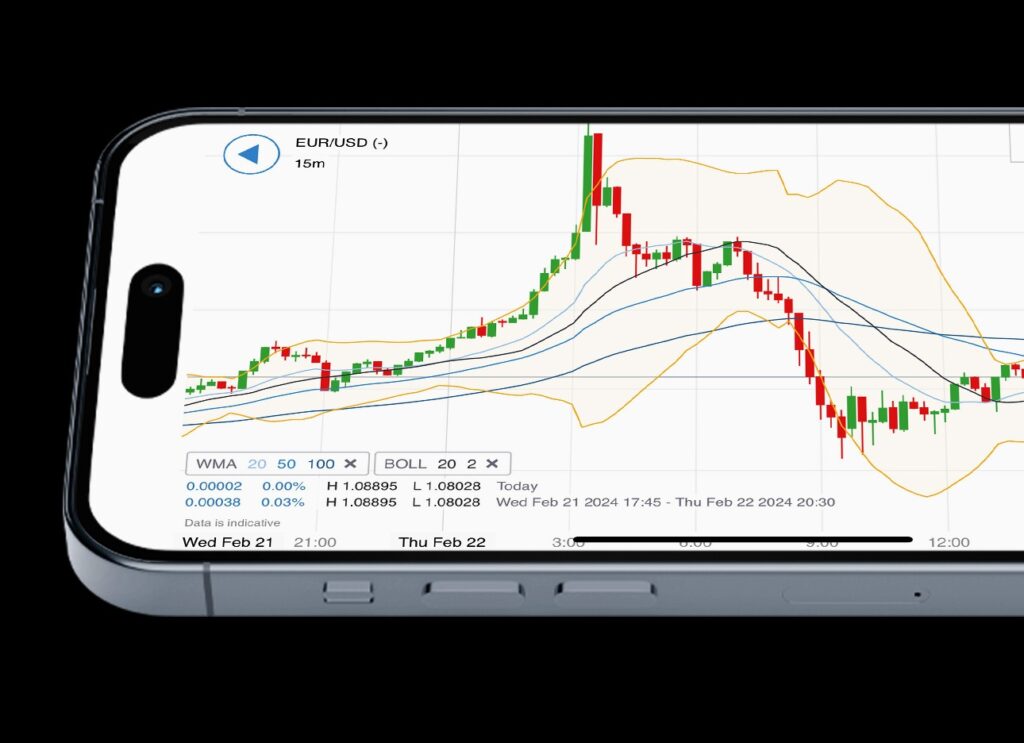
With forex learn trade, trading foreign exchange pairs is leveraged, which can make your money go further. Leverage in forex enables you to open a position on the currency market by paying just a small proportion of the full value of the position up front. For example, opening a trade on EUR/USD might require a deposit worth just 2% of the total value of the position. This initial deposit is referred to as margin.
The profit or loss you make will reflect the full value of the position at the point it is closed, so trading on margin offers an opportunity to make large profits from a relatively small investment. However, it can also amplify any losses, meaning losses could exceed your initial deposit. For this reason, it’s important to consider the total value of the leveraged forex position before trading.
6. Trade a wide range of currency pairs
Forex trading gives you the opportunity to trade a wide variety of currency pairs, speculating on global events and the relative strength of major and minor economies.
- Major currency pairs, such as GBP/USD, EUR/USD, and USD/JPY
- Minor pairs, such as AUD/JPY, EUR/JPY and EUR/CAD
- Emerging currency pairs, such as USD/CNH, USD/TRY and USD/MXN
These pairs are all available to trade from the same account via a single login.
7. Access tools to help you trade
Why Trade Forex vs Stocks?
Discover forex trading with Forex Learn Trade
FREQUENTLY ASKED QUESTIONS
How can I manage my risk in forex trading?
What instruments can I trade forex with?
What is the easiest forex pair to trade for beginners?
What are the most traded currency pairs?
How much does it cost to start trading forex?
The cost of trading forex depends on which currency pairs you choose to buy or sell. With forex learn trade, you’ll trade forex on margin, which means you need a small percentage of the full value of the trade to open and maintain your position.
Other than the margin, you also pay a spread, which is the difference between the ‘buy’ and the ‘sell’ price of an asset. To open a long position, you’d trade slightly above the market price (buy price) and to open a short position, you’d trade slightly below the market price (sell price).
Lastly, if you do not close your position before the end of the trading day, you will pay overnight funding charges.